Scroll down for the full video
↓↓↓
Part 1
The rain had stopped only minutes before Nora Blake saw the little girl in red. Water still ran along the seams of the night-market pavement, gathering neon into broken orange and blue lines. Scooters forced their way between food carts and wet umbrellas, horns barking over the hiss of grills. Steam rolled from noodle pots, from frying pans, from tarps sagging with rain, turning every face into a half-remembered shape before the crowd swallowed it again. Nora had been following the girl for three alleys, first because the child looked lost, then because someone else appeared to be following her too.
The man in the ragged dark-green sweater kept to the edge of the stalls. He did not hurry. He did not call out. He simply shifted whenever the child shifted, using steam and pedestrians as cover. Nora noticed him because fear had taught her to notice patterns. Years of searching taught her to recognize when a child was not merely wandering but running from instructions she did not understand.
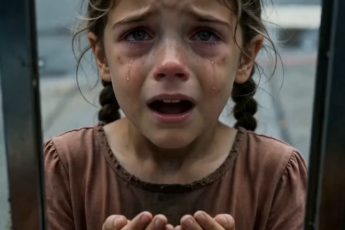
The girl was five, maybe six. Her black hair hung tangled against her cheeks, wet from rain and tears. A torn red jersey dress clung to her thin shoulders, and her bare feet slapped the wet asphalt as she tried to dart toward the scooter lane. Nora lunged before thinking. Her black boots slid, her faded blue-gray coat snapped behind her, and her hand closed around the child’s muddy wrist just as a motorbike screamed past close enough to spray water across them both.
“Stop!” Nora gasped. “You’ll get hit.”
The child twisted with the panic of a trapped bird. “Don’t touch me! Don’t touch her!”
The words struck Nora strangely. Not don’t touch me alone. Don’t touch her. As if the child were protecting someone who was not there.
Nora dropped to one knee in the wet street, lowering herself until her face was level with the child’s. She kept her grip loose, fingers open, visible, careful not to hurt. Around them the market continued as if fear were just another smell in the air: roasted meat, engine exhaust, hot oil, rainwater, old fruit. A woman at a dumpling stall glanced over and looked away. Two teenagers stepped around them. The man in the green sweater paused behind a food cart, his face buried in shadow.
“I’m not going to hurt you,” Nora said. Her voice shook despite her effort to steady it. “My name is Nora. What’s yours?”
The child’s chest jumped with sobs. “Let me go.”
“I will. I promise. Just not into the road.”
Nora reached with her other hand to brush wet hair from the girl’s cheek, then stopped before touching her face. That was when she saw the bracelet.
It clung to the child’s muddy wrist, almost hidden beneath grime and a torn thread from the red dress: tarnished silver, two small wings meeting at the center, one feather bent slightly outward. The shape caught the orange neon from a signless stall lamp and flashed red for a single breath. Nora’s hand went cold.
She knew every scratch on that bracelet. She had slept for years with its twin under her sleeve, not as jewelry but as a punishment she could carry. Her mother had bought the pair when Nora was fifteen and her baby sister was barely old enough to curl a fist. One for Nora. One for little Anya. A silly promise, their mother had said, so the girls would always find each other. Three months later, Anya disappeared from a crowded station, and the promise became a chain Nora never removed.
“That…” Nora whispered. “That bracelet.”
The child tried to pull back again. “It was my mom’s.”
Nora moved slowly. With trembling fingers, she pulled back the sleeve of her own blue-gray coat. Beneath it, on her adult wrist, was the same tarnished silver wing. Same bend in the outer feather. Same old clasp. Same history.
The girl stared. Her crying faltered, not stopping, but changing shape.
“I gave this to my baby sister,” Nora said. The words barely survived the noise around them. “Her name was Anya.”
The child blinked through tears. Her muddy lips parted.
Nora heard the name before the girl spoke it. It rose inside her with such force that the market seemed to disappear: not gone, not silent, but far away, like a city underwater. She saw a station platform from twenty years before. Saw her mother’s panic. Saw the empty stroller. Saw a pink blanket abandoned beside a vending machine. Saw herself at fifteen screaming a name until her throat bled.
“My name is Anya,” the child whispered.
Nora’s grip loosened at once. She almost fell backward onto the wet pavement. The girl was too young, of course. Too small to be the baby Nora had lost. But blood did not obey years when grief was involved, and the bracelet was not a coincidence the world had any right to create.
“Who gave it to you?” Nora asked.
“My mom.”
“What was her name?”
The child’s eyes darted toward the food stalls. Toward the man in the green sweater. Nora saw it and understood that the market held another answer, waiting behind steam.
Anya pulled her wrist close to her chest. “She told me to run if I ever saw you.”
Nora could not breathe. “Me?”
The child nodded once, small and terrified.
A scooter horn tore through the lane. Steam swelled between them, and when it thinned, the watcher had moved closer.
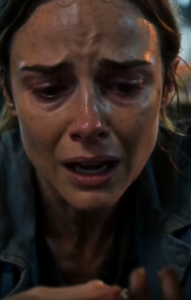
Part 2
Nora did not turn her head at once. She kept her eyes on Anya, because frightened children watched adult faces for danger the way sailors watched weather. The little girl’s shoulders were shaking. Her bare toes curled against the wet pavement, trying to grip a world that would not hold still. Behind Nora, somewhere near the skewered-fish stall, the man in the dark-green sweater shifted his weight, and the puddles gave a small sound beneath his shoes.
“Anya,” Nora said, forcing each word to be soft. “Who told you to run from me?”
“My mom.”
“Is she here?”
Anya shook her head, then stopped, uncertain. The answer had rules attached to it. Nora recognized that too. A child trained by fear never answered a simple question simply.
Nora lowered both hands, palms up. “I won’t hold you. See? You can step back if you want.”
Anya did take one step back, but only one. Her gaze stayed locked on Nora’s bracelet. The two silver wings glinted across the narrow distance between them, twin marks in neon and mud. For the first time, the girl looked less like she wanted to escape and more like she wanted the impossible thing in front of her to make sense.
“You said you gave it to your baby sister,” Anya whispered.
“I did.” Nora swallowed. Rainwater dripped from the end of her ponytail onto her coat. “A long time ago.”
“She said you would say that.”
The sentence chilled Nora more than the weather. “Who is she?”
Anya reached into the front of her torn red dress. From beneath the damp fabric, she pulled out a folded photograph sealed in cloudy plastic. The plastic was cracked at one corner, the picture inside creased nearly in half. She held it with both hands like evidence too heavy for a child.
“She gave me this,” Anya said. “She said if the woman in it ever found me, I had to run.”
Nora’s body knew the truth before her eyes did. The market noise narrowed. Scooter horns flattened into a dull ringing. A cook lifted a pan and flame flashed blue behind the steam. The watcher stood blurred beyond Anya’s shoulder, motionless now, as if he had been waiting for the photograph to appear.
Anya unfolded it.
Nora saw herself.
Not as she was now in the soaked blue-gray coat, older and hollowed by years, but younger: fifteen, maybe sixteen, hair cut shorter, eyes wild with some emotion the photograph had frozen into accusation. She stood on a station platform beside a stroller. Her hand was raised toward the camera. In the torn half of the picture, something had been removed. Someone. The missing piece made the remaining image cruel, because without it the photo looked exactly like proof. A girl beside an empty stroller. A hand raised. A face caught in panic that could be mistaken for guilt.
Nora’s breath broke. “Where did you get this?”
Anya hugged the photograph to her chest. “My mom said you took her baby.”
“No.” The word came out too quickly, too sharp. Anya flinched, and Nora immediately lowered her voice. “No, sweetheart. I didn’t. I was the one who lost her.”
The watcher moved.
Nora saw him in the reflection of a puddle before she heard him. He stepped from behind the food stall, face still shadowed by the hanging tarp, hands empty at his sides. He did not look like a kidnapper from a police sketch or a monster from Nora’s nightmares. He looked tired. Wet. Ordinary. That made him worse.
Anya saw Nora’s eyes shift and turned. The man stopped.
“Don’t listen to her,” he said.
His voice was calm, almost bored. Nora felt twenty years of searching lock into one narrow line.
“Who are you?” she asked.
The man’s mouth twitched. “Someone who knows what happened on Platform Seven.”
The words struck harder than any shove. Nora had never told the police which platform her sister vanished from after the first report. That detail had been buried in files, interviews, and family rooms where grief slowly became blame. Her mother had died still believing there was a witness somewhere who had seen the truth and chosen silence.
Anya looked between them. “Nora?”
The sound of her name in that small voice nearly undid her. Nora kept herself on one knee so she would not tower over the child. “Listen to me. I don’t know what he told you. I don’t know what your mother believed. But the bracelet on your wrist belonged to my sister. If your mother had it, then she knew something about that day.”
The man took another step. A scooter cut between market lanes, forcing him to pause. For one second orange neon lit his face, showing a scar along his jaw and eyes that held no surprise at being recognized, only irritation at being delayed.
Anya’s hands shook around the photograph. “She said the woman in the photo ruined everything.”
Nora stared at the torn edge. Suddenly she understood the missing half. Someone had cut away the person she had been reaching for. Someone had made a desperate sister look like a criminal. The photograph was not proof. It was a trap that had survived long enough to frighten a child who should have been safe.
“Anya,” Nora said, “turn it over.”
The girl hesitated, then flipped the plastic with trembling fingers. On the back, almost erased by water and age, was a line of handwriting. Nora could not read all of it through the grime, but she saw enough: If she finds you, ask her about the wings.
Nora’s eyes filled. That was not a warning. It was a message.
The watcher saw her understand. His calm finally cracked.
He moved forward.
Nora reached out, not to restrain Anya, but to place herself between the child and the man. “Run to the lantern stall,” she whispered. “Now.”
Anya did not move. Her frightened eyes fixed on the two matching bracelets, one on her wrist, one on Nora’s, both trembling in the market light.
The watcher’s shoes splashed closer. The crowd flowed around them, blind and loud. Nora lifted the torn photograph, her own teenage face staring back from the plastic like a ghost accused of a crime she had spent her life trying to solve.
“Because you were the one in the photo,” Anya whispered again, but this time her voice was different. Less certain. More afraid of the answer than of Nora.
Nora looked down at the picture, then at the man emerging through steam.
The missing half of the photo fluttered somewhere in memory, just beyond reach.
Cut to black.