The fortress plaza of Valemere was built for kings, not boys like Nico Bellari.
Pale limestone towers rose into the hard Mediterranean sun. Blue banners snapped from the walls. Gold-armored guards stood in two clean columns beside the broad statue base at center-right, their helmets throwing sharp shadows on the stone. Merchants, villagers, and court servants filled the plaza in rows, leaving the main path open for nobles, messengers, and anyone important enough to be noticed.
Nico was none of those things.
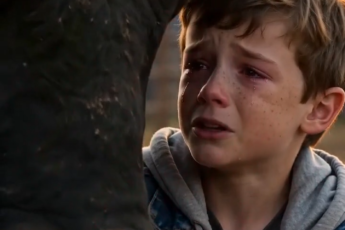
He was ten years old, small for his age, with olive skin, thick black curls, and dirt on one cheek. His torn sand-colored linen shirt was tied with a brown waist cord. Patched shorts hung above dusty sandals. A shallow basket of oranges and figs bumped against his hip as he walked foreground-center, keeping his eyes down and his shoulders tight.
Around his neck hung a heavy bronze ring on a leather cord.
He hated the ring.
It was too large, too old, and too strange. It had belonged to his mother, or so the woman who raised him had said before fever took her voice. She had warned him never to sell it, never to lose it, and never to enter Valemere with it showing. But fruit did not sell well outside the fortress walls anymore, and hunger had a way of making warnings sound like stories.
So Nico crossed the plaza with the ring hidden under his shirt.
At first, no one cared.
A guard glanced at his basket. A merchant shouted prices near the well. A child reached for an orange and was pulled back by his mother. High above, at the royal balcony, King Isandro Solenne stood upper-center beneath the blue banners, wearing an ivory cloak trimmed in dull gold and a crown shaped with sun points. He looked out over the plaza with the tense mouth of a ruler who had spent years waiting for bad news.

Nico slowed near the statue base.
The bronze ring pressed suddenly against his chest.
Not heavily.
Hotly.
He stopped.
The basket swung once and settled against his hip. A fig rolled but did not fall. Nico placed one hand over the ring beneath his shirt, frightened by the heat of it.
Then the statue base answered.
A thin gold light spread through the stone.
The carved crown-and-sun symbol on the limestone plinth began to glow from inside, as if fire had been sleeping under the chisel marks for a hundred years. The nearest guards stepped back. The crowd turned in a slow wave. Voices died one row at a time.
Nico looked down at the glowing symbol.
His mouth opened, but no sound came out.
From screen-left, Minister Aldo Ren pushed through the citizens with a bundle of scrolls clutched to his chest. He was elderly, bald, with tan skin, a white beard, round spectacles, and one shaking hand lifted toward the boy.
“That is no necklace!” Aldo shouted.
The words struck the plaza like a bell.
Nico stumbled back half a step.
“I did not steal it,” he said, too quietly for anyone but the closest guards to hear. “It was my mother’s.”
Aldo’s face went pale beneath the sun.
Above them, the camera followed the minister’s pointing hand to the royal balcony.
Behind King Isandro, the great wall crest woke.
A sun carved into the stone behind the balcony filled with gold light. It began at the center, then ran outward into the crown shape around it. The glow touched the king’s cloak and the edges of his crown. Isandro turned slowly, as if afraid to see what he already knew.
For years, the lost line of Valemere had been only a wound whispered behind closed doors. The queen had died. The infant heir had vanished. A cradle had been found empty after the northern raid, and the old royal sign had gone dark on the walls. Isandro had kept the throne because someone had to hold the kingdom together, but every morning he had stood beneath a crest that refused to shine.
Now it burned above him.
The king looked down at Nico.
The boy stood frozen in the plaza, one hand still on his chest, basket of fruit held steady in the other arm. Dust moved around his sandals. The gold-armored guards did not know whether to seize him, protect him, or kneel. The crowd waited for the king to decide what the light meant, though every heart in the plaza already knew.
Nico tried to step away.
The leather cord around his neck snapped.
The bronze ring slipped free.
It did not fall.
It rose.
Nico gasped and clutched the basket tighter with both hands, oranges and figs pressed against his torn shirt. The ring lifted slowly above his head, turning in the sunlight. It stayed centered, never touching his hair. As it rotated, the dark bronze brightened from within, its old tarnish opening into lines of gold. The circle stretched in light, not metal, forming the shape of a crown with sun points that matched the crest on the wall.
The plaza stopped breathing.
A guard whispered a prayer.
Minister Aldo lowered his scrolls, tears filling his old eyes. “By the first sun,” he said. “The bloodline stands.”
Nico shook his head, terrified. “No. I sell fruit. That is all.”
No one laughed.
Above him, King Isandro gripped the balcony rail.
His brown eyes widened. The sternness left his face so completely that he looked older and younger at the same time. Tears gathered there, not from weakness, but from the shock of seeing hope return wearing dust, torn linen, and a fruit basket.
“Who was your mother?” the king called down.
Nico looked up at him through the ring’s gold light.
“Her name was Mira,” he said.
The name broke something in Isandro.
His mouth moved once before any sound came. His trimmed gray beard trembled. The king had heard that name only in dreams and in guilt. Mira had been a palace maid assigned to the queen’s nursery, a girl accused after the raid, hunted, and never found. Some had said she betrayed the child. Others said she died protecting him. Isandro had never known which story was mercy and which was truth.
Now her son stood beneath the awakened sign.
Aldo pointed harder, voice shaking. “Sire, the mark on the crest, the ring, the age. He is the child.”
The crowd shifted.
Nico backed toward the statue base, but the clear path remained around him. Nobody touched him. Nobody dared. The crown of light continued to turn above his curls, casting gold across his cheeks and the dust on his skin.
King Isandro looked at the guards below.
“Do not move against him.”
The order was quiet, but it carried.
Every guard froze.
Nico’s small nervous mouth trembled. “I have done nothing wrong.”
“No,” Isandro said, his voice breaking over the plaza. “You have done nothing wrong.”
The words made Nico more afraid, not less. He had known hunger, alleys, fever, bad roofs, and the bargaining of fruit at market. He did not know balconies, banners, ministers, or kings crying in public. He did not know why an old bronze ring had become a sun crown above his head.
He only knew that every eye in Valemere was on him.
The gold light from the statue base joined the light from the balcony crest. Dust rose through it in bright particles. The fruit in Nico’s basket glowed warm orange and deep purple. The sun crown turned once more, slow and exact, and the shadow it cast on the limestone formed the royal emblem perfectly.
Minister Aldo took one step forward, then stopped himself.
He looked ready to kneel.
So did the guards.
So did half the crowd.
But King Isandro raised one hand from the balcony, not to command them down, but to hold them still. His eyes never left Nico. He looked like a man afraid that if anyone moved too quickly, the miracle would vanish.
The final frame held Nico below, small and frightened with the basket still in his arms; the ring-crown glowing above him; the statue base center-right burning with the crown-and-sun sign; Minister Aldo screen-left with a shaking hand; King Isandro high on the balcony, tears in his eyes; guards in two columns and the crowd frozen behind them.
Before anyone could kneel, before the name of the lost heir could be spoken aloud, the sun flare filled the plaza and the image cut to black.