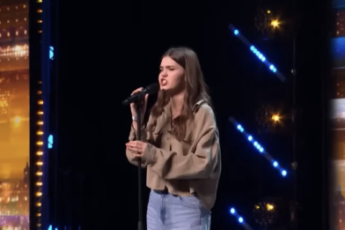
The first sound is a nerve-jangler. It’s a single word that lands like a drumstick strike and instantly sets the mood for the night—a promise that the show ahead will be fast, loud, and unapologetically fun.
The showcase, collected under the cheeky banner They Might Be Small… But They ROCK! Got Talent Kids, delivers exactly what it says. Across one full-throttle program, a parade of young musicians step into the bright lights with grown-up courage. They shoulder big songs and bigger expectations. And they do it the way rock has always demanded: by risking everything in front of a room full of strangers.
The spark that primes the room
Openers matter. Before a single guitar cable hums, there’s the surf-rock calling card, tossed out like a gauntlet from a kid who knows how to wake a crowd. The word is a genre, a joke, a memory—and a mission statement.
Wipeout.
It’s punctuation without a full sentence. And it’s enough. You can feel the room tilt forward—adults, judges, and peers leaning in as sticks rise, shoulders loosen, and a tiny kit threatens to sound like a stadium. There is always a temptation to patronize youthful performers, to grade on a curve. That temptation disappears the moment rhythm locks and the beat takes on a life of its own.
In that shock of recognition—Oh, they’re not just cute; they’re good—you remember what these stages are for. They compress the impossible into a few raw minutes: nerves turning into tempo, curiosity into cheering, and fear into a grin that refuses to leave.
“Make… some noise.”
Every great live moment is a pact between stage and seats. Tonight, the pact is spoken aloud in the simplest rallying cry. A voice—an emcee, a judge, or a bandmate—calls the room to attention with two spare beats, sandwiched by courage.
some noise.
Sometimes you don’t need poetry. You need volume. You need the shared permission to let go. The room obliges. Even from a screen, you can feel the vibration tip back toward the kids—energy out, energy in, a loop that tightens with every bar. You can hear shoes tapping to keep up and the sharp intake of breath when a fill lands cleaner than expected. It is the most generous audience a young artist can ask for, and they earn it in real time.
There’s an honesty to children performing rock that adults rarely manage. They haven’t learned to pretend it’s easy. So you see the count-in whisper, the side-eye look to a bandmate, the half-second of doubt that vanishes at the first chorus. Rock is built on that honesty. It rewards the brave.
The Queen-sized gamble
There is a threshold every young rock singer eventually approaches: the decision to take on a song so iconic you can feel the risk in your teeth. On this night, a voice steps forward and makes that choice. The room knows what’s coming before the words arrive. Then they arrive, unblinking, standing on the shoulders of a giant.
Mama, just kill the man.
Put it on against
Too late,
but my time has come.
Since she was down my spine,
body
You don’t cover Queen to play it safe. You cover Queen because you trust your band, because your drummer can drive a freight train, and because your guitarist can make a solo sing without drowning out the story. Most of all, you cover Queen because the story isn’t about perfection; it’s about heart. And here, the heart is steady.
Listen to how the syllables sit in a smaller chest, how breath becomes part of the arrangement. You hear the wobble that means it matters. You hear a room hold its breath with the singer, then let it out as the band shifts gears. The arrangement doesn’t mimic; it interprets. It keeps the operatic bones of the original but lets kid-sized lungs and fingers color the spaces between. The effect is disarming—not an imitation, but a conversation across generations.
A name in the dark, a human beat
Live music is not a machine. It’s a chain of tiny, human decisions: a glance, a nod, a half-step closer to the mic. In one charged heartbeat, that chain reveals itself in a single, searching call across the stage.
Jared?
The name hangs for a fraction of a second—concern, cue, and camaraderie all wrapped in one syllable and a question mark. It is a reminder that behind the polish there are kids feeling everything at once. The check-in is quick, then the beat returns. The shared mission continues. And somehow the music is better for it, warmer and more alive, because we have seen the people inside the performance.
That is the paradox of shows like this. The stakes are high enough to rattle knuckles, yet the magic shows up in the cracks: a whispered count, a near-miss that tightens the focus, a laugh that steadies the hands. Audiences don’t crave flawlessness. They crave a moment they can believe. This showcase offers many.
What small hands teach big rooms
There’s a reason these performances land. First, the arrangements respect the songs without mummifying them. “Wipeout” is an attitude as much as a beat; the kids treat it that way. The Queen cover is reverent but unafraid. It carries the melody like a torch rather than a museum label.
Second, there’s craft. You can hear practice in the way downstrokes line up, in the way a cymbal is allowed to breathe rather than crash over everything, in the space left for a voice to find its footing. You notice the choices: a slower build to make room for vowels, a tighter verse to keep fingers fresh for the chorus. The polish doesn’t sand off the edges; it frames them.
Third, there’s community. A crowd is an instrument. Here, it tunes itself. The call to make “some noise.” isn’t just hype; it’s an invitation to join the band for a night. When listeners accept, the kids on stage gain a second wind. The symbiosis is real, and you can hear it pushing tempos a hair faster, lifting harmonies a hair higher, and sending courage down the line.
The pivot from fear to flight
Every set includes a moment when the performance flips from survival to joy. You feel it when the singer stops gripping the mic and starts playing with space, when the drummer’s shoulders loosen, when the guitarist’s right hand stops counting and starts dancing. That pivot doesn’t show up on a set list. It sneaks in, riding the back of a clean transition or a lyric that lands.
The Queen sequence is the show’s fulcrum. It starts with weight—lines about time and consequence that would challenge any adult vocalist—and transforms into something strangely light. The words stay heavy. The room floats. That’s the alchemy of rock: gravity poured into a groove you can carry.
Even the lyrical stumbles are gifts. When a mouth shapes “Put it on against,” you know what the heart is trying to say, and that shared knowledge closes the distance between stage and seat. The audience hears effort, not error. And effort is one of the most beautiful sounds in music.
Noise, on purpose
There’s a cliché that young bands think louder is better. Here, loud is a choice with shape. It swells and recedes. It leaves room for breath. The exhortation to make “some noise.” isn’t an excuse to drown; it’s a command to participate. Volume becomes a kind of trust—trust that the hands will find the next chord, that the feet will keep the tempo, that the room will carry the final note home.
This is what the best talent showcases do. They take a familiar stage and fill it with risk. They remind us that songs are living things, borrowed for a few minutes and sent back into the world with new fingerprints on them. They turn spectators into witnesses.
The afterglow
When the last chord fades, the best part remains: the look that crosses a kid’s face after doing something very hard and very public. It’s not relief alone. It’s expansion. The room feels larger because it made room for them. And they, in turn, made room for everyone who needed to be reminded that courage sounds like drums and voices and a single word tossed into the air.
In the end, the set isn’t just a string of covers. It’s a study in scale. Small bodies, big feelings. Short arms, wide reach. Familiar songs, new stakes. The showcase earns its title because the paradox is real: they might be small, but they do, in fact, rock.
If you want to feel that pivot from fear to flight for yourself, watch the full performance. Listen for the surf-rock wink that opens the door. Lean into the charged hush before the Queen lines, and catch the human heartbeat of a single name called across the lights. Most of all, answer the invitation when it comes. Make—together—“some noise.” The kids on stage have done their part. Now it’s your turn.