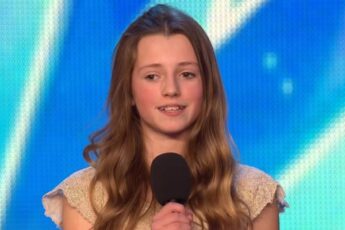
From a one-man orchestra to an 11-year-old guitar prodigy, relive ten Britain’s Got Talent golden buzzer shocks, rule breaks, and standing ovations—with the judges’ own words ringing in your ears.
The golden buzzer doesn’t just light up a stage. It rewrites a life in the space of a verse, a dance break, a breath held a beat too long. Over the last decade on Britain’s Got Talent, ten of those thunderclaps have done more than shower someone in confetti. They’ve reminded millions why we keep watching—because sometimes, the best of us walks in from nowhere and leaves as if they always belonged.
- The French one-man orchestra who hypnotized the room
- A dad at the piano writes his own fairy tale
- Japan flew in—and the kids stole the button
- When a rule break wasn’t a mistake—it was destiny
- “I am possible”: a dancer who remapped the stage
- A star with six strings at 11
- Four shocks that rounded out the decade
- Why these ten still ring in our ears
The French one-man orchestra who hypnotized the room
He stepped out with a grin and a gentle apology for his English, then drew a bright line: “All you’re about to hear is made with my voice.” Within seconds, the theater became a club, a cinema score, a heartbeat. Loops rose, rhythms snapped, melodies threaded through the air in layers you could feel in your ribs. The judges leaned forward. A murmur—then a roar. Someone blurted, “We like him. We like him a lot.” Another added, “Literally, I was hypnotized by your music.”
It was the sort of audition that triggers instinct more than debate. Ant and Dec bolted like “greyhounds out of a trap,” slamming the golden buzzer before the panel could catch its breath. A judge laughed, “We didn’t even have a chance to say anything.” They did anyway. “You are absolutely phenomenal. We’ve never had anyone like you on the show.” Another shook his head at the sheer audacity: “It doesn’t matter where you’re from. We should have heard of you by now… this was phenomenal.”
A dad at the piano writes his own fairy tale
John Courtney walked to the grand piano with his family in the crowd and three decades of bar gigs in his fingers. What followed wasn’t just a song. It was a story sung in third person to keep the fear at arm’s length—then, bravely, dropped. “No more third person, just daddy. This is me.” He joked about Simon’s blinding smile and paid homage to Susan Boyle. He sang to his kids. He sang to his late father. He sang to every parent who has ever chased a dream without letting go of a hand.
The theater softened. One judge said it made the whole audience “just fall in love.” Another saw a man who “made all his dreams come true.” The golden buzzer felt less like a shock and more like permission: step through, your time is now. Confetti fell. A working musician of thirty years had a new title—finalist.
Japan flew in—and the kids stole the button
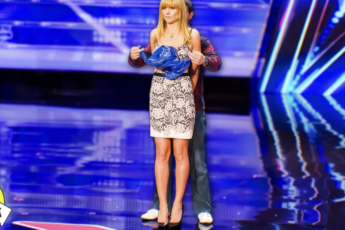
“We came from Japan… for twenty hours,” the high-energy troupe grinned, bouncing on their toes as if the stage itself were a trampoline. They stretched, joked about getting the hosts involved, and then detonated the room with precision and joy. When they finished, one judge searched for language and came up empty: “When it’s brilliant like this… words aren’t really necessary.” Another admitted, “My son is literally going crazy right now.”
What happened next was the kind of live-TV chaos that becomes show lore. A cheeky invitation—“Is there anyone who thinks they deserve a golden buzzer?”—and small footsteps answered. A judge laughed, incredulous and proud: “That was my son. Amanda’s daughter.” The panel rolled with it. “We are gonna see you in the final,” they promised. For once, the golden buzzer belonged to the kids who believe first and ask questions later.
When a rule break wasn’t a mistake—it was destiny
Gamal John—father of three, urged forward by his eight-year-old who yelled, “Go on, daddy!”—opened his mouth and bent the Palladium to his will. A judge’s hands were in the air before the chorus hit. “I am gobsmacked… I am speechless.” Another confessed they knew it from “the first opening note.” Then came the gasp and a spray of gold. A new judge, a new instinct, a broken format. Backstage, someone fretted, “We are about to get fired.” On the panel, they laughed at the panic and sealed the verdict: “If you give something, you can’t take it away.”
Later, the judges told the truth the whole room felt: “We would have all pressed our golden buzzer… that was just a master class.” The only sorrow, one teased, was for the act who didn’t get the confetti. But the message to Gamal and his son was clear: some rules exist just to be rewritten in gold.
“I am possible”: a dancer who remapped the stage
Born in South Africa, Musa Motha spoke softly about cancer, amputation, and friends who taught him to dance by laying boxes on the floor. “Your left crutch is a left leg,” they told him. He’d been imagining this stage “forever,” he said. Then the room went quiet. A single voice floated—“These four lonely walls have changed the way I feel…”—and Musa painted the lyrics with motion. Each glide was a choice. Each pause, a refusal to be less than whole. Gasps rose with every pivot, every held balance where physics seemed to blink and recalibrate.
The panel spilled over itself. “That was… sensational.” “I’ve never seen anything like that.” Another judge, voice thick, called it “one of the most extraordinary auditions” the show had ever seen. They had a problem, they admitted: “Listen to me. We used them all.” But the room had made its decision. The ovation set its own rules. Musa closed with a credo, half mantra, half instruction to anyone listening: “I’m the true believer and a true example of breaking the word impossible into true, I am possible.”
A star with six strings at 11
He was small and polite and admitted he was “quite nervous.” A judge smiled: “It’s the best thing in the world to feel nervous. It means that you care.” He learned guitar at seven with his granddad, he said, and idolized a certain hard-rock legend. Then the first riff hit and the persona shifted—no longer an 11-year-old but a bandleader commanding the Palladium with tone, timing, and swagger.
When it stopped, the silence snapped into cheers. “A star is born,” a judge said, almost to themself. “I have never ever seen anything like that in my life.” Another added the formal stamp—“Congratulations on a well deserved golden buzzer”—and the mentorship began in real time. “You already have your own distinct sound… You’re that good.” Backstage, he was a kid again. Onstage, he was something else: inevitable.
Four shocks that rounded out the decade
This video doesn’t just revisit fan favorites; it restores the moments that reset the show’s pulse. There’s the veteran vocalist who finally took his swing after nearly two decades of near-misses, closed his eyes, and sang the most loaded lyric in show business—“I did it my way”—as if the words had been waiting for him all along. There’s the act that arrived with a purpose—“We want to break barriers today”—and did, not through spectacle, but through craft and connection, proving that representation is a talent multiplier when the talent is undeniable.
There’s also the purest kind of reality-show alchemy: a singer who chose the one number a certain judge could not stand. The preamble was blunt—“Tomorrow,” from Annie, is his “worst song.” What followed flipped the room. By the last note, even the holdout was smiling through a shake of the head. “I used to hate that song,” he admitted, “and this is the best version I’ve ever heard.” If the golden buzzer stands for anything, it’s the right to change a mind in public.
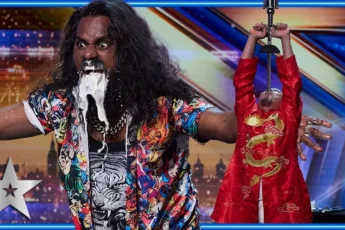
And then there are the outliers—auditions that start like a prank and end like a parable. One had the panel asking, half-laughing, half-suspicious, “Is this a wind-up?” It wasn’t. Another left them swearing, “No one will believe this wasn’t set up,” even as they double-checked their own surprise. These aren’t just tricks of editing. They’re what happen when a performer meets a moment and refuses to blink.
Why these ten still ring in our ears
Across the decade, patterns emerge. Many of these artists almost talked themselves out of coming. Some traveled oceans. Some carried grief. Some were cheered into place by children who love them beyond metrics. When the button falls, it’s never just about high notes and high kicks. It’s about the exact second an audience recognizes itself in a stranger.
It’s also about the panel, whose best decisions have always been emotional, sometimes chaotic, and often contagious. The host sprint to the desk. The rule break that becomes a headline. The judge who admits they were wrong about a song, a genre, a person. The shared look that says, All of us felt that—so let’s make it official.
Ten golden buzzers in ten very different shades of gold. A beatbox symphony that needed no band. A father’s lullaby turned anthem. An 11-year-old’s solo that rattled the rafters. A dancer who redrew the edges of motion. A soul singer so certain he forced the rules to catch up. A troupe that crossed a continent and left with a promise—and a confetti cannon courtesy of the kids. Plus the redemptions, the barrier-breakers, the too-good-to-be-true twists that were, gloriously, true.
If you’ve ever wondered why one press of a button can change anything, you’ll find your answer here—again and again—each time the lights flare, the room gasps, and someone hears the words they’ve been chasing: you belong. Watch the video, feel the charge, and keep it bookmarked. The next time someone asks whether moments like these still happen, you’ll have ten of them ready to play.